Political Storm Over Assam CM’s Remarks Raises Questions About Court Oversight
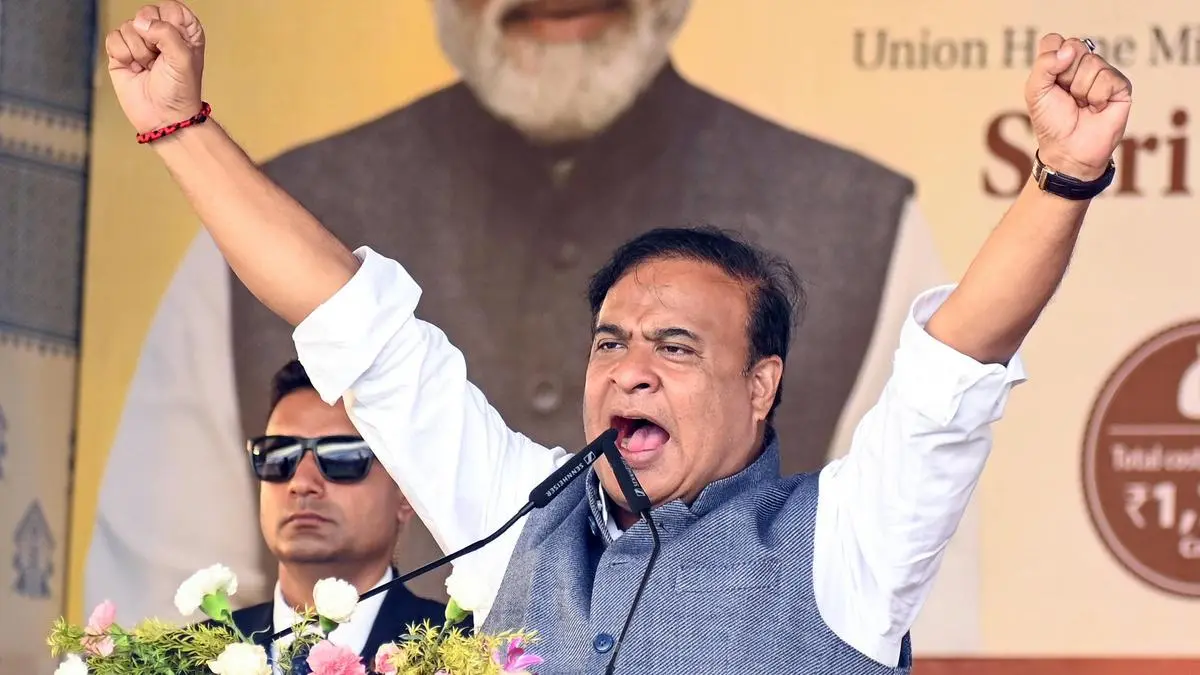
A renewed political and legal debate has emerged following controversial public statements by Assam’s Chief Minister, prompting commentators to ask whether India’s top court will step in under its own hate-speech directives issued in recent years.
In April 2023, the Supreme Court instructed governments across the country to register first information reports on their own initiative against individuals who promote hatred or communal hostility. The aim was to prevent violence, reinforce social harmony, and ensure that law enforcement did not wait for private complaints before acting.
Allegations of Inaction
Critics argue that these directions have not always been enforced uniformly. Civil liberties groups point to multiple instances in which complaints about inflammatory speeches were raised but allegedly failed to trigger police action.
Such concerns have intensified in Assam, where the Chief Minister’s repeated comments about Bengali-speaking Muslims—often referred to using a contested term—have generated sharp reactions from activists, academics, and opposition leaders.
Contrasting Legal Responses
Observers have also compared this situation with other cases in which individuals faced swift legal action for online remarks or public statements. Some scholars and journalists say the contrast highlights an uneven application of legal standards, particularly when political leaders are involved.
Legal experts note that courts in recent years have shown sensitivity even to indirect or coded language that could provoke social tension, ordering special investigations in select cases when judges believed posts or speeches carried hidden incitement.
Election Rhetoric and Past Statements
Several of the Chief Minister’s remarks date back years and include claims about migration, voting rights, land disputes, and law-and-order concerns. Supporters say his comments reflect anxieties about demographic change and border security, while critics insist the language goes far beyond policy discussion and risks stoking communal division.
During different public appearances, he has spoken about electoral roll revisions, alleged illegal immigration, and eviction drives from government land. Some academics and journalists have countered these assertions with historical research, arguing that migration into Assam occurred in waves shaped largely by Partition, war, and famine, rather than by any continuous large-scale influx in recent decades.
Academic Studies Challenge Popular Narratives
Historical scholarship cited in public debates outlines multiple phases of population movement between what is now Bangladesh and India, including significant Hindu migration during and after Partition, as well as smaller Muslim flows. Researchers maintain that citizenship laws and demographic trends over decades complicate sweeping claims of present-day “invasions.”
Data from the National Register of Citizens process has also been referenced in these discussions, with analysts pointing out that exclusions from the draft list cut across religious lines and remain subject to legal challenges.
Calls for Judicial Clarity
With criticism mounting, legal commentators argue that the Supreme Court may eventually be asked to clarify whether its earlier directions on hate speech apply equally to those holding the highest offices in state governments.
They also point to the court’s recent willingness to pause regulatory measures in other sectors on the grounds that they could fragment society, suggesting that similar reasoning could be invoked when assessing political rhetoric.
A Broader Question of Accountability
At the heart of the controversy lies a wider issue: how democratic institutions balance free expression, political debate, and the need to prevent speech that could inflame social divisions.
As public discourse grows increasingly polarised, pressure is building on constitutional bodies to ensure that the standards they set are applied consistently—regardless of political stature.
Whether the judiciary chooses to intervene directly or allow existing legal processes to run their course, the episode underscores the continuing tension between law, politics, and social cohesion in contemporary India.