India and EU Push for Landmark Trade Pact Amid Global Tariff Tensions
India and the European Union are moving rapidly toward what leaders on both sides have described as a potentially historic free trade agreement, as shifting global trade dynamics and tariff uncertainties add urgency to negotiations that have stretched for nearly two decades.
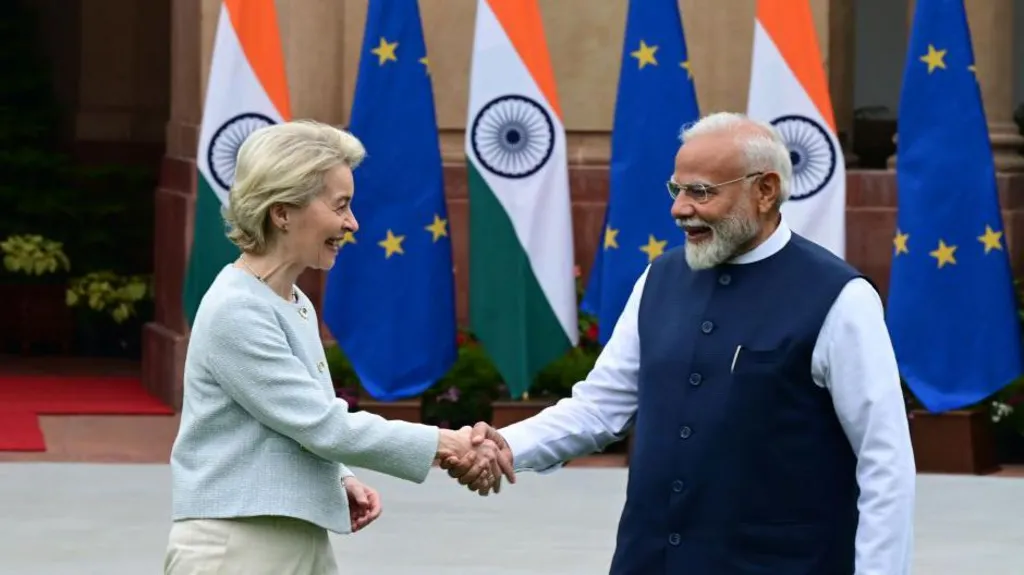
European Council President António Costa and European Commission President Ursula von der Leyen are set to visit India as chief guests for Republic Day celebrations, where high-level discussions are expected to focus heavily on advancing the long-pending economic partnership.
Strategic Timing for Both Sides
The renewed momentum comes at a delicate geopolitical moment for Europe, while India is simultaneously seeking to diversify its global partnerships. Analysts say New Delhi’s outreach underlines a broader strategy of balancing international relationships and strengthening economic ties beyond any single partner.
Observers believe a formal announcement could follow an upcoming leadership summit later this month, with both sides signalling optimism that negotiations are nearing their final stages.
Why the Deal Matters
For the EU, closer ties with India are increasingly attractive given the country’s rapid economic rise. India is among the world’s fastest-growing major economies and is expected to cross the $4-trillion GDP mark soon, overtaking Japan in overall output.
European officials argue that combining the two markets could create one of the largest free-trade zones globally, covering close to two billion people and representing a substantial share of world economic activity.
From India’s perspective, the agreement could restore preferential access for exporters to European markets, particularly after earlier benefits were rolled back in recent years. Lower tariffs on products such as garments, pharmaceuticals, machinery and petroleum goods could provide significant relief to Indian manufacturers navigating shifting global trade rules.
Sensitive Sectors and Negotiation Hurdles
Despite optimism, several sticking points remain. India is expected to protect politically sensitive sectors such as agriculture and dairy, while tariff reductions for automobiles, wine and spirits may be introduced gradually rather than immediately.
European negotiators, meanwhile, are pressing for stronger intellectual-property protections and data security standards. Environmental regulations — particularly Europe’s new carbon-border levy on imports — are another area of concern for Indian exporters, especially small and medium-sized enterprises facing higher compliance costs.
Long-Term Implications
Trade specialists suggest the pact could reshape supply chains and reduce both sides’ reliance on a narrow group of trading partners. In an era marked by tariff disputes, export controls and geopolitical competition, a deeper India–EU partnership is seen as a way to build stability and predictability for businesses.
While political debates remain in parts of Europe over climate and rights-related issues, analysts say recent diplomatic signals and economic realities may smooth the agreement’s path through legislative approval processes.
If concluded, the deal would mark one of India’s most significant trade agreements to date and a major step for Europe in strengthening its presence in the Indo-Pacific economic landscape.