
States That Were Expected to Collapse — But Didn’t
The region offers numerous examples of countries widely predicted to fragment but ultimately remained unified. Lebanon’s long civil war produced repeated forecasts of partition, as rival militias controlled distinct territories along sectarian lines.
Yet when the war ended, Lebanon re-emerged as a single centralized state. Despite deep political dysfunction and local power centers, formal territorial division never materialized.
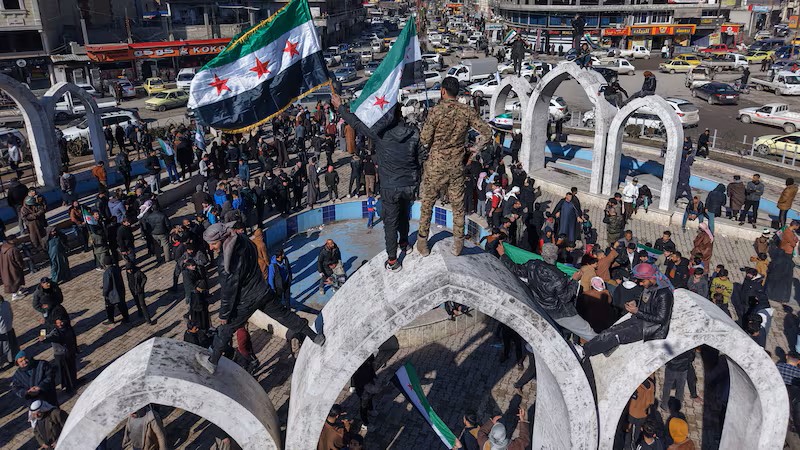
Syria followed a similar pattern. After 2011, the state lost control over large areas, and the country appeared fractured. However, the emergence of permanent breakaway entities never became a realistic outcome. Recent efforts by Damascus to reassert authority over formerly autonomous regions reflect this enduring commitment to unity.
Yemen and the Limits of Secession
Yemen presents another instructive case. Although the country was unified only in 1990 and remains divided today in practice, political efforts to formalize separation have met consistent resistance.
Even movements advocating southern independence face opposition from regional actors who fear that legitimizing partition would encourage similar dynamics elsewhere.
The Misreading of Arab Societies
Calls for partition frequently surface in Western and Israeli policy discourse, often based on the assumption that Arab societies are naturally prone to division along sectarian or tribal lines.
This view relies on a form of cultural essentialism that exaggerates primary identities while underestimating broader national and civic bonds. In reality, individuals often carry multiple identities simultaneously, which shift depending on circumstances.
In Syria, for example, sectarian identity existed long before the civil war, but it was usually secondary to national or Arab identification. Only under the extreme pressures of war did ethno-sectarian loyalties become dominant.
Why Unity Often Feels Safer Than Division
Even in deeply divided societies, the prospect of partition is rarely appealing. Smaller sectarian or ethnic entities would likely be economically weak, politically unstable, and internationally vulnerable.
In Lebanon, proposals framed as federalism are often thinly disguised calls for sectarian separation. Yet many citizens see little benefit in living within narrow communal enclaves that offer neither prosperity nor opportunity, especially for younger generations.
Regional Powers and the Fear of Precedent
Another crucial factor preventing state break-up is regional self-interest. Major powers in the Middle East generally oppose partition because they fear similar pressures within their own borders.
During Lebanon’s civil war, Syria exerted enormous influence but never allowed formal partition, aware that such a precedent could later threaten its own territorial integrity.
The same logic applied during Syria’s conflict. While foreign actors exploited border regions, no state sought to permanently redraw Syria’s boundaries, fearing retaliatory destabilization elsewhere in the region.
The Comfort of the Status Quo
Ultimately, the endurance of Arab states reflects a deeper regional preference for the known over the uncertain. Change in the Middle East is often radical and disruptive, producing instability rather than improvement.
As a result, both societies and states frequently cling to existing frameworks, however flawed, as a form of reassurance against unpredictable outcomes.
More Than a Century After Sykes-Picot
As the region marks over a century since the Sykes-Picot Agreement reshaped the Middle East, the supposed fragility of Arab states appears increasingly overstated.
Despite wars, uprisings, and external pressure, these states have shown a surprising attachment to the very borders once dismissed as arbitrary “lines in the sand.”