viral talking point across platforms. The reality: What the device actually is
viral talking point across platforms.
The reality: What the device actually is
Social media reacts with humour
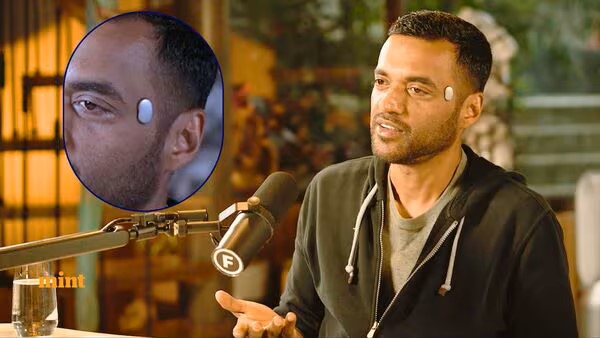
As clips from the podcast circulated online, curiosity around the mysterious gadget exploded. Reddit and X users offered humorous guesses, calling it everything from “chewing gum” and a “pimple patch” to an “external SSD” and even a “charging pad for the brain.”
Some joked that Goyal had nowhere to stick bubblegum, while others quipped that it was literally his brain. The speculation turned the device into a viral talking point across platforms.
The reality: What the device actually is
In truth, the device is called Temple — an experimental wearable designed to continuously monitor blood flow in the brain in real time. The compact sensor, typically gold or silver in colour, is worn close to the temple to collect neurological data.
Blood circulation to the brain is considered a key marker of cognitive health and ageing. By tracking changes over time, the device aims to offer deeper insights into how the brain ages.
Part of a larger research initiative
The device is linked to Deepinder Goyal’s personal scientific work on the Gravity Ageing Hypothesis, conducted under an independent initiative called Continue Research. He has committed nearly $25 million (around ₹225 crore) of his personal wealth to fund this effort.
Importantly, Temple is not a Zomato product and has no commercial connection to the food delivery platform. The research is being developed privately under Goyal’s parent company, Eternal, and is not yet available for public or commercial use.
Understanding the Gravity Ageing Hypothesis
In late 2025, Goyal publicly shared his views on how gravity could play a role in shortening human lifespan. According to the hypothesis, gravity gradually reduces blood flow to the brain because humans spend most of their lives in an upright position, with the brain positioned above the heart.
Over decades, this subtle reduction in circulation may contribute to brain ageing. Since key brain regions regulate vital functions such as breathing, heart rate, immunity, hormones, and body temperature, weakened blood flow could trigger faster ageing across the body.
An open scientific discussion
Goyal has described the research as open-source and rooted in scientific curiosity rather than corporate ambition. He has encouraged researchers and the public alike to engage with the hypothesis and explore its implications for human longevity.