‘You’ll Say Hello’: Jaishankar Explains India’s Stand on Good and Bad Neighbours
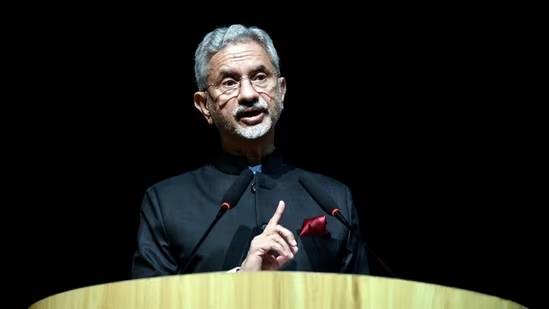
External Affairs Minister S Jaishankar recently addressed India’s neighbourhood policy while speaking at an event held at IIT Madras in Chennai. His remarks came shortly after his visit to Bangladesh, where he attended the funeral of the country’s former Prime Minister Khaleda Zia.
Context of Jaishankar’s Remarks
During the interaction, Jaishankar was asked about India’s approach toward its neighbours, especially in light of the political unrest and protests currently unfolding in Bangladesh. Responding to the question, he explained that India’s foreign policy is guided by what he described as “common sense” and practical diplomacy.
He said that India’s attitude towards its neighbours depends largely on how those neighbours behave. According to him, when a neighbouring country maintains friendly or non-hostile relations, India naturally responds with cooperation, assistance, and goodwill.
India’s Approach to ‘Good Neighbours’
Jaishankar explained that when there is a spirit of goodwill, India prefers to build strong ties and extend help whenever possible. He said that India believes in supporting friendly nations through investments, humanitarian assistance, and economic cooperation.
He cited several examples, including India’s role in providing vaccines during the COVID-19 pandemic, extending fuel and food support during the Ukraine crisis, and offering financial assistance worth billions of dollars to Sri Lanka during its economic collapse. According to him, these actions reflect India’s belief in mutual respect and cooperation.
What Jaishankar Said About ‘Bad Neighbours’
While speaking about good neighbours, Jaishankar also addressed the issue of hostile neighbours who engage in actions harmful to India’s security. Without naming any country directly, he stated that nations which repeatedly support or encourage terrorism cannot expect normal relations.
He emphasised that India has every right to defend itself and that no external power can dictate how the country should respond to threats. He added that self-defence is a basic principle and India will exercise that right whenever necessary.
Indirect Reference to Pakistan and the Indus Treaty
In what appeared to be a reference to Pakistan, Jaishankar spoke about agreements made in good faith, including water-sharing arrangements. He pointed out that such agreements were based on trust and cooperation, which cannot exist if terrorism continues.
He remarked that a country cannot demand the benefits of cooperation while simultaneously engaging in hostile actions. According to him, good neighbourly relations are built on mutual respect, not on double standards.
Message Behind the Statement
Jaishankar’s remarks underline India’s evolving foreign policy approach, where cooperation is extended to those who respect peace and stability, while firm action is reserved for those who threaten national security. His comments highlight a clear distinction between diplomacy driven by goodwill and responses shaped by security concerns.
The statement has sparked discussions on India’s neighbourhood policy, especially at a time when regional geopolitics continues to remain sensitive and complex.